Debt 20200528

Dollar devaluation is pushing the market higher it’s definitely not the glowing economic fundamentals or fiscal restraint of the 21st century.

Dollar devaluation hasn’t been against currencies of other countries just as addicted to spending and debt as the U.S. but quality stocks, precious metals, real estate and nearly every tangible asset.


Data Spreadsheet & Sources

A 11.16% annual revenue to total debt ratio makes it impossible for the U.S. to accurately report inflation, normalize interest rates or any Federal expense whose increase is pegged to reported inflation such as Social Security, Medicare, Military or Civilian employee pensions. if interest rates did normalized in 2021 to the 1970 – 2007 average of 8.70%, 68% of all Federal Revenue would be consumed by debt service costs.

Ask yourself with Income, assets, Federal revenue all outpacing reported inflation how could the annual Federal revenue to debt ratio deteriorate from from 50.62% in 1970 to a mere 11.16% in 2021?

Average annual reported BLS inflation from 1970 to 202?0 4.03%.
Average annual growth in U.S. Personal Income 5.51%
Average increase in Median home prices 5.25%
Average increase in the S&P 500 8.63%
Average increase in Gold 9.81%
Average increase in Federal revenue per capita by 4.99%
Average increase in Federal revenue per employed person by 4.53%
Average annual growth in GDP per capita by 5.14%
Average annual growth in the GDP per employed person 4.70%
2021 has a higher percentage of the population employed and paying taxes than 42 out of the last 52 years.

Reported Inflation Fact or Fiction?

1970 – 2021 Actual price increases versus price increases if pegged to reported inflation,

Average annual growth in Personal Income from 1970 through 2020 was 5.51% outpacing reported inflation by a strong 1.48%. Personal Income if pegged to inflation it would have been $29,714 in 2020 versus $59,642.


Data Spreadsheet & Sources

Median home prices have appreciated by an average of 5.25% annually outpacing reported inflation by 1.22%. If pegged to inflation they’d be $192,671 in 2020 not $336,950,


Data Spreadsheet & Sources

The S&P 500 appreciated by an average of 8.63% annually outpacing reported inflation by 4.83%. If  pegged to inflation it would have closed out 2020 at 705.41 not 4,063.04.


Data Spreadsheet & Sources

Gold has appreciated by an average of 9.81% annually outpacing reported inflation by 5.78%. If pegged to inflation it would closed out 2020 at $315 not $1,867.


Data Spreadsheet & Sources

GDP per capita & per employed person

From 1970 through 2020 average annual growth in GDP per capita was 5.14% outpacing reported inflation by 1.11%. If pegged to inflation per capita GDP would have been $38,551 in 2020 versus $64,443.

Annual growth in GDP per employed person averaged 4.70% outpacing reported inflation by 0.67%, if pegged to inflation GDP per employed person would have been $108,190 in 2020 versus $151,103.


Data Spreadsheet & Sources

Federal revenue, per capita & per employed person

Over the last 52 years per capita average annul growth in Federal Income was 4.99% outpacing reported inflation by 0.96%, Federal revenue per capita if pegged to inflation would have been $7,159.71 in 2020 not $10,319.60,

Growth in Federal revenue per employed person averaged 4.53% outpacing reported inflation by 0.50%, if pegged to inflation it would have been $20,093 in 2020 not $24,196.86,


Data Spreadsheet & Sources

U.S. Employment

In March 2021 45.19% of the U.S. population was employed, a higher percentage than 42 out of the last 52 years, 45.19% is 1.60% from the 52 year high of 46.79% set in 2000 when the U.S. had a balanced budget and 10.84% from the 52 year low of 34.35% set in 1971. Yet the official unemployment rate in March 2021 was 6.10%, a 6.10 % unemployment rate is higher than 30 out of the last 52 years.


Data Spreadsheet & Sources

Perception

With growth in personal income, homes, assets all outpacing reported inflation, you’d think the quality of life for a U.S. citizens would be at or near an all time high, that citizens would be able to retire debt, have large post inflation gains on their homes and even greater post inflation gains in their portfolios.

With Federal revenue outpacing reported inflation, a higher percentage of the U.S. population employed and paying taxes now than 42 out of the last 52 years you’d assume the U.S. would be running budget surpluses, paying down debt and working towards restoring their credibility along with their AAA debt rating.

The reality of what these numbers produced

A record 26.5 trillion in new Federal debt
9.7 trillion in Federal Reserve bailouts to keep the U.S. solvent
5.128 trillion of created money to buy U.S. debt the free market wouldn’t at rates the Federal Government could afford to pay.
2 debt downgrades with at least one more on deck
148.084 trillion in unfunded liabilities

In just 12 years the U.S. finds itself in yet another financial crisis that over the last 16 months has required 10.107 trillion in Federal spending and 5.655 trillion in new Federal debt.

10.107 trillion is equivalent to the total government debt of the United Kingdom, Canada, Australia, Mexico, Russia and India combined,

10.107 trillion is 2.05 trillion more than China’s total debt of 8.057 trillion.


Data Spreadsheet & Sources

Federal Revenue & Spending

With revenue outpacing reported inflation by a strong 0.96% per capita and 0.50% per employed person it’s hard to reconcile average Federal spending exceeding revenue by 1.83% per capita and 1.98% per employed person.

Federal spending from 1970 through 2020 averaged 130.75% of annual Federal revenue, in 2020 and 2021 Federal spending is running at 219.23% of total Federal Revenue.

Average reported Inflation 4.03%

Per capita average annual growth in Federal revenue 4.99%
Per capita average annual growth in Federal spending 6.82%
Per employed person average annual growth in Federal revenue 4.53%
Per employed person average annual growth in Federal spending 6.51%

In 2020 Federal spending per employed person was $53,647 equivalent to 89.95% of U.S. personal income of $59,642.

2020 Per capita Federal Revenue $10,319
Per capita Federal spending $22,879
Per employed person Federal revenue $24,196
Per employed person Federal spending $53,647


Data Spreadsheet & Sources

Increases in Federal Spending

From 2015 through 2019 Total annual Federal spending (all-in) averaged 4.301 trillion.

In 2020 the Federal Government spent 7,631 trillion 3.330 more than the 2015-2019 average,

Final Federal Spending (all in) for 2021 is estimated to equal or exceed 2020’s 7.631 trillion.

The justification Covid-19,  what we know in 2021.

According to CDC and WHO prior to 2020 viruses that cause lower respiratory infections were present in an average of 3,190,350 people who die annually.

Covid-19 is a virus that causes respiratory infections and was present in 3,483,529 people who died in 2020.

Total people who died that tested positive for Covid-19 with one or more preexisting condition 3,349,065

Total people who died that tested positive for Covid-19 with no preexisting conditions 134,464.


Data Spreadsheet & Sources

According to WHO and the CDC a person in 2020 with no preexisting conditions had a 10 times greater chance of dying from a road injury than Covid-19.

Using the Covid-19 pandemic to justify another print and spend party is a new low, even for U.S. politicians.

The way these politicians spent these borrowed trillions is absurd, The they’re financing these trillions through the creation of money from and backed by nothing puts the next U.S. financial crisis squarely on deck.

Over the last 16 months the Federal government spent 10.107 trillion generating 5.67 trillion in new Federal debt during the same period the Federal Reserve created 3.74 trillion to buy Treasury debt the free market wouldn’t.

5.671 in new Federal debt is 742 billion dollars more than the entire fiscal cost of World War 2. in 2021 dollars (Total Fiscal cost of World War 2 between 1941 and 1946 was 291.18 billion according the BLS  this translates into 4.913 trillion today)


Data Spreadsheet & Sources


Since 1913 the Federal Reserve has created a net total 7.992 trillion from and backed by nothing for Bank and Treasury bailouts

771 billion of the 7.92 trillion was created from 1913 through 2007

3.441 of the 7.992 trillion between January 2008 through December 2019

3.780 of the 7.992 trillion during the last 16 months, 3.780 trillion is 339 trillion more than the total between 2008-2019.

By January 2020 Federal debt had gotten so heavy,  Treasury rating and yields so low, the U.S. has been unable to sell enough Treasury debt on the open market to to satiate their ever increasing spending addiction.

2.795 of the created 7.922 trillion went to buy bad bank debt, the majority of this bad debt was from the same banks that caused the 2008 financial crisis, the Fed still owns the majority of this junk debt today.

Data Spreadsheet & Sources

The 7.922 trillion in bank and Treasury bailouts between 2008 and 2021 is on top of the 1.241 trillion in operating profits the Federal Reserve forfeited to the U.S, Treasury during the same period.

Data Spreadsheet & Sources

Fed’s contribution to keep the U.S. solvent before and after 2008

From 1913 through 2007 the Federal Reserve’s total contribution to keep the U.S. solvent was net 771 billion dollars.

Since 2008 8.392 trillion to keep the U.S. solvent.

Unprecedented spike higher in M1

Over the last 58 weeks M1 has spiked 385.35% higher from 4.774 trillion to 19.156 trillion, yes other countries are doing the same thing that doesn’t make it right.


Data Spreadsheet & Source

As Federal debt soared inflation and real rates of return magically disappeared

From 1970 through 2007 Treasuries had an average yield of  8.70% and paid an average of 3.99% more than reported inflation (3.99% real rate of return),

The average yield since 2008 2.67% paying 0.94% more than reported inflation.

The current average Treasury yield 2.01% paying 2.19% less than reported inflation.


Data Spreadsheet & Sources

Ask yourself, does it make any sense Federal spending, Federal debt and the creation of money all hit a historic highs while inflation hit a historic low?

The only explanation for this aberration is reported inflation is fictional.

To appreciate just how absurd BLS reported inflation has become compare the total cost of Roosevelt’s New Deal from 1933-1939 to what BLS inflation calculations tell it would cost in 2021.

New Deal

Total cost of the New Deal from 1933 to 1939 was 41.70 billion , according the BLS  this translates into 836.77 billion in 2021 dollars or 10.96% of what the Federal government spent in 2020, 17.91% of total spending in 2019.

During the new deal Federal debt per capita increased by $129.00 from $179.14 in 1933 to $308.14 by the end of 1939.  BLS inflation calculations tell us this translates into an increase Federal dent per capita of $2,588.48, from $3,594.79 to $6,183.27.

In the the last 16 months Federal debt per capita has increased by $16,831 or 272.21% of what Federal Debt increased by per capita during the New Deal that built America’s infrastructure and prepared it for World War 2 from 1933 through 1939.

What the New Deal did and funded

    • Jobs for a total of  8.5 million Americans, 6.39% of the population.
    • The majority of the jobs trained unskilled men to learn a new profession as they carried out public works infrastructure projects.
    • Built or modernized more than 55,000 civilian and military buildings
    • Built ordinance manufacturing facilities preparing for World War 2
    • Built 32 navel vessels, many played key roles during World War 2.
    • Built or modernized 4,026 schools, the majority are still open today
    • 130 new hospitals, including Fitzsimons , Allegheny General & Jersey City Medical Center.
    • More than 29,000 new bridges and tunnels including the Lincoln Tunnel, Throgs Neck and Golden Gate bridges.
    • Scores of Dams including Hover and Shasta, the majority still produce Hydro Electric Power today.
    • Built or modernized over 180,000 miles of Highways, including the Los Angeles Freeway and Overseas Highway.
    • Built or modernized more than 150 airports including La Guardia and Midway.
    • Built or modernized nearly 9,000 miles of storm drains and sewer lines.

New Deal Programs provided more than Infrastructure

    • The laborers of the New Deal programs worked in schools serving more than 900 million hot lunches to hungry children during the depression.
    • Operated 1,500 nurseries enabling childcare so parents could work.
    • Funded over 225,000 concerts and thousands of plays.
    • The New Deal cultural programs produced more than half a million works of art including  Jackson Pollock’s 17A which sold for 200 million in 2016.
    • The New Deal Writers’ Program featured pieces from soon-to-be famous Authors like John Steinbeck, Steinbeck went on to win the Pulitzer Prize in 1940 for his novel The Grapes of Wrath.

Or comparing the total fiscal Cost of World War 2 to what BLS inflation calculations tell us it would cost in 2021.

61 countries participated in World War 2 to protect the world from Hitler’s Socialist agenda, Mussolini’s Fascist and Hirohito’s aristocratic oligarchy.

The U.S.’s participation from 1941 to 1945 had a total fiscal cost of 291.18 billion. BLS.GOV inflation calculations tell us this 291.18 billion in 1942 translates into 4,912 trillion 2021 or 64.37% of what the Federal Government spent in 2020.

From 1941 through 1945 Federal debt per capita increased by $1,455.72 from $383.61 to $1,839.33. BLS inflation calculation  translates this to an increase if $24,876.56 from $6,555.45 to $31,432.01 in 2021 dollars.

In the last 4 years U.S. Federal debt per capita has increased by $25,389.99 or $513.43 more in 2021 dollars than the increase in Federal debt per capita from 1941 through 1945.

BLS calculations tell us the combined fiscal cost of the new deal and world war 2 would be 5.749 trillion in 2021 dollars equivalent to 75.34% of what the Federal Government spent in 2020 and wants to spend in 2021.

Purpose of reporting fictional inflation reporting

Lower inflation translates into  trillions in contained costs on all Federal expenditures pegged to the official inflation rate such as Social Security, Medicare, Military and Civilian Employee Pensions and Treasury rate that determine debt service cost.

Impact on Federal debt service cost.

From 1970 through 2020 total Federal debt increased from $380.91 billion to $26,880.92 billion up 8,098.94%.

Federal debt service cost during the same period increased from $34.64 billion to $538.45 billion up 1,454.25%.

From 2008 through 2020 total Federal debt increased from $8,950.75 billion to $26,880.92 billion up 200.32%, annual Federal debt service cost during the same period increased from $411.21 billion to $538.45 billion up 30.91%.


Data Spreadsheet & Sources

Medicare

From 1970 through 2007 annual medicare expenditures per capita increased by an average of 10.73%  reported inflation during the same period averaged 4.70%

From 2008 through 2021 annual medicare expenditures per capita increased by only 4.37%  reported inflation during the same period 1.90% annually.

Total medicare expenditures are estimated to come in at 732.50 billion in 2021 and are expected to increase to 925.51 billion by 2025.

According to the 2020 Social Security Trustees Report  all medicare reserve funds will be entirely depleted by 2026.


Data Spreadsheet & Sources

Kaiser Family Foundation (KFF) examined the sources of Medicare funding in 2018. Medicare recipients may be surprised to learn that payroll taxes accounted for only 36% of monies spent, the Federal government’s general fund 43%, and premiums a mere 15%. The remaining revenue came from transfers from states, Social Security benefit taxes and earned interest.

Social Security

From 1970 through 2007 annual Social Security Benefits paid  per capita increased by an average of  7.30%, reported inflation during the same period averaged 4.67% annually.

From 2008 through 2021 annual Social Security Benefits per capita increased by 4.32%, reported inflation during the same period averaged 1.90%.

Total Social Security Benefits are estimated to come in at 1.156 trillion in 2021 and 1.445 trillion by 2025.

Despite more money being paid into Social Security than any other time in history Social Security will stop running a surplus this year starting in 2022 the Federal Government will need to borrow or create more money to pay retiring beneficiaries rather than borrowing out the surplus which they’ve done every year since 1935.

According to the 2020 Social Security Trustees Report Social Security will be insolvent on or before 2035.

If I lived in the United States and had to make involuntary payments into a retirement account that would be insolvent by the time I retired I’d be very angry and want monetary compensation and jail-time for the decision makers that thought it was OK  to embezzle funds from my retirement account to fund absurd Federal Spending.    


Data Spreadsheet & Sources

Status of  Government Trust Reserves

As of April 2021 the Federal Government had borrowed out 5.982 trillion in reserves held in trust for Government Pensions replacing these reserves with “special issue securities” these non marketable securities earn a non competitive rate with duration between 1 to 15 years

Non competitive rates with a negative rate of return ensure a guaranteed loss in buying power for every beneficiary that made mandatory payments their entire working lives into Social Security, Military or Civilian Employee Pension Trusts.


Data Spreadsheet & Sources

Cost to citizens

Inflation manipulation by the BLS to justify low Treasury rates and the depletion of retirement accounts has stripped American citizens of 10’s of trillions of dollars and lowered the quality of life for all, the sad part is no one is calling the Federal Government out so they continue to do it.

Poverty rate in the United States

The U.S. Census Bureau  reports the 2020 poverty rate at 19.71%, 5.85% higher than the 1989-2020 average of 13.85% .

Looking closer at the U.S. poverty rate the U.S. Census Bureau also uses deceitful accounting tricks to massage the official poverty rate lower.

In 1970 if your income was below 49.60% of  U.S. personal income you were below the poverty threshold, this ratio has been lowered every year since 1970.

By 2020 this percentage had been lowered to 21.69% of U.S. personal Income. The U.S. Census Bureau is telling you if your annual pretax income is $12,940 annually, $1,078 monthly you were above the poverty threshold and ineligible for many poverty related subsides.

Using the 1970 ratio of 49.60% you’d be below the poverty threshold in 2020 if your pre tax annual income was below $29,581, $2,465 monthly.

According the the Social Security administration 51% of the employed American population makes less that $30,000.

By lowering the criteria than defines the poverty threshold the U.S has contained trillions poverty related subsides.

It should come as no surprise that the official poverty rate is linked to the official BLS inflation rate.


Data Spreadsheet & Sources

U.S Homeless Rate

According to the Department of Housing and Urban Development (HUD) since 2005 the homeless rate in the U.S. has declined by 23.04% from 754,147 in 2005 to 580,455 in 2020.

According to the Department of Housing and Urban Development (HUD) since 2005 the homeless rate in the U.S. has declined by 23.04% from 754,147 in 2005 to 580,455 in 2020.

HUD also is telling us that the homeless rate in the United States increased by only 12,751 people in 2020.

Using tweaked poverty rate numbers it’s the poverty rate is at a 50 year high and the homeless rate declined by 23.04% since 2005 does this make sense to you?

Data Spreadsheet & Sources

It should be very clear why  U.S. Federal debt has been downgraded twice in ten years and faces at least 1 or more in the next 4.

With the spending on deck the annual Federal Revenue to total Federal debt ratio will drop from 11.16% to less than 9.00% by 2022

Politician will raise long-term capital gains and income tax for top earners

Politicians will raise Corporate tax, hike the minimum wage raise income tax revenue, up regulations which they hope will result additional income from fines Face it it’s already bad and getting worse by the year the trade deficits tell the story

What these political dinosaurs that have ruined the country don’t realize  is professional trader like myself no longer consider Treasuries and dollars quality.

The majority of these long term investors woud rather will tak thier chanes owning quality stock who’s value is based o tangible assest and profitability rather than Treasuires and dollars back by the the full faith and trust of the US government, thiose who do liquidate will by gold or any tangible asset before Treasuires.

The stock market will sell off  will be far less than politicains were hoping negating the justification they were looking for to print more money.

With a current credit rating that’s the same as Finland and Hong Kong’s the U.S. can’t afford to raise rates to attract buyers for record trillions in new debt,  that pay  the lowest yields history with the worst debt rating in history,  denominated in a currency it’s central bank creates by the trillions. What idiot would buy a 5 to 30 year Treasury bond with a negative real rate of return in 2021?

Unable to Fund record defict spending the Federal Government will instruct the Federal Reserve to create as many trillions as it takes to sustain spending.

True Dollar devalution will enage with tenacity as this occurs over 7 trillion in foreign debt will unwind.

Unable to find buyers for foreign debt that is being liquidated much less new debt to sustain spending the Federal Government will instruct the Federal Resrve to create as much money as it takes to cover foreign liquidation and sustain spending.

The annual Federal revenue to total federal debt ratio will fall to less than 5%

Corporate taxation, regulation and litigation with esculate to the point corporations will be fleeing the US for offshore locations, the percentage of the workforce that is employed in the manuafaturing sector will drop from the current 8% to less than 4%

People who make $400,000 or more will do the math, incorporate offshore throgh the same structure Epstein provided to a host of politicians and high profile clients while he entained them on little St james rather than forfeit income equivilent to 6 to 9 months of thier professional lives  each year.

They fly intop the airport at the bottom of the hil of my house

They enjoy beautiful weather, clear water in a polite society

An they watch the U.S implode from 800 miles sout east ok miami political corruption and incompetence destroy whats left of America

Although most bilionares that are critial of censervative have alredy set up what epstien offered politicians and high profiel clients I don’t think they like the environment that thier agnda will create.


I see Federal Debt by the end of 2024 above XXX and the Federal Reserve owning YYYY of that debt

With the creation of XXXX trillion the cost of eveything witll rocket higher


The Federal Reserve will go from buying


he math magicians at the BLS’s wont be able to contain offical inflation without potential Federal incration


I’ve been a professional trader and run a family office for nearly 30 years, my primary objective is preservation of  family wealth, secondary objective enhancement of family wealth, my performance is judged by asset valuation in gold not a fiat currency.


From 2008 though April 2021 Federal debt has increased from

11.16% is the lowest Federal revenue to debt ratio in history and makes it impossible for the U.S. to accurately report inflation, normalize interest rates or any Federal expense whose increase is pegged to reported inflation, Social Security, Medicare, Military, Civilian employee pensions and Treasury rates.

If  inflation was accurately reported Treasury rates would normalize to the 1970 – 2007 average of 8.70% at 8.70% debt service cost would consume 68% of  all Federal revenue.


Data Spreadsheet & Sources


Perception Versus Reality 20200527

Perception: Personal income, stocks, home prices, precious metals, GDP, Federal revenue per capita and per employed person have all outpaced reported inflation.

1970 – 2020

    • Annual Average BLS reported inflation 1970 through 2020 4.03%.
    • Average growth in U.S. Personal Income 5.51%
    • Average increase in Median home prices 5.25%
    • Average increase in the S&P 500 8.63%
    • Average increase in Gold 9.81%
    • 1970 -2020 average increase in Federal revenue per capita by 4.99%
    • Average increase in Federal revenue per employed person by 4.53%
    • Average annual growth in GDP per capita by 5.14%
    • Average annual growth in the GDP per employed person 4.70%
    • 2021 has a higher percentage of the population employed than 42 out of the last 52 years.

From 1970 through 2021 Personal income grew by an annual average of 5.51%% outpacing reported inflation by 1.48%, if personal income was pegged to inflation it would have been $29,714 in 2020 versus $59,642.


Data Spreadsheet & Sources

Median home prices have appreciated by an annual average of 5.25% outpacing reported inflation by 1.22%. If home prices were pegged to inflation they would have been $192,671 in 2020 versus $336,950,


Data Spreadsheet & Sources

The S&P 500 appreciated by an average of 8.63% outpacing reported inflation by 4.83%. If the S&P was pegged to inflation it would have been 705.41 in 2020 versus 4,063.04,


Data Spreadsheet & Sources

Gold has appreciated by an annual average of 9.81% outpacing reported inflation by 5.78%. If gold was pegged to inflation it would have been $315 in 2020 versus $1,867. 


Data Spreadsheet & Sources

GDP per capita & per employed person

From 1970 through 2020 average annual growth in GDP per capita was 5.14% outpacing reported inflation by 1.11%. If pegged to inflation GDP per capita would have been $38,551 in 2020 versus $64,443.

Annual growth in GDP per employed person averaged 4.70% outpacing reported inflation by 0.67%, if pegged to inflation GDP per employed person would have been $108,190 in 2020 versus $151,103.


Data Spreadsheet & Sources

U.S. Employment

In March 2021 45.19% of the U.S. population was employed, a higher percentage than 42 out of the last 52 years, 45.19% is 1.60% from the 52 year high of 46.79% set in 2000 and 10.84% from the 52 year low of 34.35% set in 1971. Yet the official unemployment rate in March 2021 was 6.10%, a 6.10 % unemployment rate is higher than 30 out of the last 52 years.


Data Spreadsheet & Sources

Federal revenue, per capita & per employed person

Over the last 52 years per capita average annul growth in Federal Income was 4.99% outpacing reported inflation by 0.96%, Federal revenue per capita if pegged to inflation would have been $7,159.71 in 2020 versus $10,319.60,

Growth in Federal revenue per employed person averaged 4.53% outpacing reported inflation by 0.50%, if pegged to inflation it would have been $20,093 in 2020 versus $24,196.86,


Data Spreadsheet & Sources

With growth in personal income, homes, assets all outpacing reported inflation, you’d think the quality of life for a U.S. citizen would be at or near an all time high, that citizens would be able to retire debt, have large post inflation gains on their homes and even greater post inflation gains in their portfolios.

With per capita Federal revenue outpacing reported inflation, a higher percentage of the U.S. population employed and paying taxes now than 42 out of the last 52 years you’d assume the U.S. would be running budget surpluses, paying down debt and working towards restoring their credibility along with their AAA debt rating.

Harsh reality

In 2021 the U.S. finds itself in yet another financial crisis that’s justified 10.107 trillion in Federal spending and 5.655 trillion in new Federal debt.

10.107 trillion is equivalent to the total government debt of the United Kingdom, Canada, Australia, Mexico, Russia and India combined.


Data Spreadsheet & Sources

5.655 in new Federal debt is 742 billion dollars more than the entire fiscal cost of World War 2. (Total Fiscal cost of World War 2 between 1941 and 1946 was 291.18 billion according the BLS  this translates into 4.913 today)

Justification, Covid-19, the facts 

A person with no preexisting conditions according to WHO and CDC had a 10 times greater chance of dying in 2020 from a road injury or diarrhea than Covid-19.


Data Spreadsheet & Sources

Using a pandemic to have another print and spend party to further monetize US debt is a new low even for the Federal government.

Debt monetization = dollar devaluation this is what’s pushed assets and personal income higher, it certainly hasn’t been the glowing economic fundamentals or fiscal restraint of the 21st century.

The dollar’s decline hasn’t been against currencies of other countries just as addicted to spending and debt as the U.S. but quality stocks, precious metals, real estate and nearly every tangible asset.

Federal spending from 1970 through 2020 averaged 130.75% of annual Federal revenue, in 2020 – 2021 it’s running at 219.23% of total Federal Revenue.


Data Spreadsheet & Sources

Federal revenue as a percent of total Federal debt in 1981 was 60.24%, 28.69% in 2007, in 2021 a mere 11.16%.

This 11.16% revenue to debt ratio makes it impossible for the U.S. to accurately report inflation, normalize interest rates or any Federal expense whose increase is pegged to reported inflation such as Social Security, Medicare, Military or Civilian employee pensions. 


Data Spreadsheet & Sources

As Federal debt soared inflation and real rates of return magically disappeared

From 1970 though 2007 Treasuries had an average annual yield of  8.70% and paid an average 3.99% more than reported inflation (-3.99% real rate of return),

The average yield since 2008 2.67% paying 0.94% more than reported inflation.

The current average Treasury yield is 2.01% paying 2.19% less than inflation.


Data Spreadsheet & Sources

Ask yourself,  does make sense to have inflation hitting a historic low at the same time spending, debt and the creation of money is hitting a new historic high?

Federal spending from 2008 through 2020 exceeded 55.319 trillion dollars, new Federal debt 17.930 trillion.


Data Spreadsheet & Sources

17.930 trillion in new Federal debt is greater than the total debt of the United Kingdom, Ireland, Greece, Norway, Russia, Australia, China, South Korea, Taiwan, Canada, Mexico, Argentina and Nigeria combined.


Data Spreadsheet & Sources

Federal debt has gotten so heavy,  US. rates and debt rating so low the U.S. has been unable to sell enough Treasuries in the open market to cover spending.

To avoid and insolvency the Federal Reserve has to created net total 7.922 trillion dollars from and backed by nothing, 7.151 trillion of the 7.992 trillion since 2008, 3.757 trillion in the last 16 months.

3.757 trillion is 363 billion more than the total the Fed created from between 2008 and  2019        

Of this 7.922 trillion 2.795  went to buy bad bank debt, the majority of this bad debt was from the same banks that caused the 2008 financial crisis, the Fed still owns the over 90% of this junk debt.

5.128  trillion to buy Treasuries the free market wouldn’t because the Federal government can’t afford to pay a higher enough rate to attract buyers in the free market to buy their debt. 


Data Spreadsheet & Sources

The 7.922 trillion is on top of the 1.241 trillion in operating profits the Federal Reserve forfeited to the U.S, Treasury between 2008 and 2021.

Data Spreadsheet & Sources

Fed’s contribution before and after 2008

From 1913 through 2007 the Federal Reserve’s total contribution to keep the U.S. economy solvent was net 771 billion dollars.

Since 2008 the Fed has contributed 8.392 trillion in created money and operating profits to keep the U.S. solvent the majority of this 8.392 trillion went to buying Federal debt the free market wouldn’t.

Over the last 58 weeks M1 has spiked 385.35% higher from 4.774 trillion to 19.156 trillion.


Data Spreadsheet & Source

Ask yourself how can you have

A higher percentage of the population working and paying taxes in 2021 than 42 out of the last 52 years.

Average Federal revenue per capita outpacing reported inflation by 0.96% and 0.50% per employed person for 52 years

Average GDP per capita outpacing inflation by 1.10%, per employed person by 0.67% for 52 years

And end up with this

A record 26.5 trillion in new Federal debt
Require 9.7 trillion in Federal Reserve bailout to keep the U.S. solvent
Require the central bank to create a net 5.128 trillion to buy government debt because the free market won’t

2 debt downgrades with more on deck
148.084 trillion in unfunded liabilities

By process elimination the only explanation is reported inflation is fictional. 

Average reported Inflation 4.03%

Per capita annual growth in Federal revenue 4.99%
Per capita average annual growth in Federal spending 6.82%

Per capita Federal Revenue in 2020 $10,319
Per capita Federal spending in 2020 $22,879

Per employed person average annual growth in Federal revenue 4.53%
Per employed person annual growth in Federal spending 6.51%

Per employed person revenue in 2020 $24,196
Per employed person Federal spending in 2020 $53,647

$53,647 in Federal spending per employed person was equivalent to 89.95% of Average Personal Income in 2020 of $59,642.


Data Spreadsheet & Sources

To appreciate how absurd BLS reported inflation has become compare the total cost of Roosevelt’s New Deal and total fiscal cost of World War 2 to what BLS inflation calculations tell us they would cost today.

New Deal

Total cost of the New Deal from 1933 to 1939 was 41.70 billion , according the BLS  this translates into 836.77 billion in 2021 or 10.96% of what the Federal government spent in just 2020, 17.91% of what the Federal Government spent pre pandemic in 2019.

During the new deal Federal debt per capita increased from $179.14 dollars to $308.14 dollars up $129.00 . According to BLS inflation calculations this translates into an per capita increase in 2021 dollars from $3,594.79 to $6,183.27 up $2,588.48.

In the last 16 months Federal debt per capita increased by $16,831

What the New Deal did and funded

    • Jobs for a total of  8.5 million Americans, 6.39% of the population.
    • The majority of the jobs trained unskilled men to learn a new profession as they carried out public works infrastructure projects.
    • Built or modernized more than 55,000 civilian and military buildings
    • Built 32 navel vessels, many played key roles during World War 2.
    • 4,026 new schools, the majority are still open today
    • 130 new hospitals, including Fitzsimons , Allegheny General & Jersey City Medical Center.
    • More than 29,000 new bridges and tunnels including the Lincoln Tunnel, Throgs Neck and Golden Gate bridges.
    • Scores of Dams including Hover and Shasta, the majority still produce Hydro Electric Power today.
    • Built or modernized over 180,000 miles of Highway, including the Los Angeles Freeway and Overseas Highway.
    • Built or modernized more than 150 airports including La Guardia and Midway.
    • Built or modernized nearly 9,000 miles of storm drains and sewer lines.

New Deal Programs provided more than Infrastructure

    • The laborers of the New Deal programs worked in schools serving more than 900 million hot lunches to hungry children during the depression.
    • Operated 1,500 nurseries enabling childcare so parents could work.
    • Funded over 225,000 concerts and thousands of plays.
    • The New Deal cultural programs produced more than half a million works of art including  Jackson Pollock’s 17A which sold for 200 million in 2016.
    • The New Deal Writers’ Program featured pieces from soon-to-be famous Authors like John Steinbeck, Steinbeck went on to win the Pulitzer Prize in 1940 for his novel The Grapes of Wrath.

Compare Roosevelt’s New Deal did for the United States versus what politicians (on both sides) have done with the trillions they’ve already spent. 

Fiscal Cost of World War 2 to what BLS inflation calculations tell us it would cost today.

61 countries participated in World War 2 to protect the world from Hitler’s Socialist agenda, Mussolini’s Fascist and Hirohito’s aristocratic oligarchy.

The U.S.’s participation from 1941 to 1945 had a total fiscal cost of 291.18 billion dollars.The BLS.GOV tells us 291.18 billion in 1942 translates into 4,912.54 billion today or 64.37% of what the Federal Government spent in 2020.

From 1941 through 1945 Federal debt per captia esculated from $383.61 to $1,839.33 up $1,455.72, the BLS tells us this translates into $6,555.45 to $31,432.01 up $24,876.56. Since 2017 U.S. Federal debt per capita has increased by $25,389.99.

The BLS tells us the combined fiscal cost of the new deal and world war 2 would be 5.749 trillion in 2021 dollars equivalent to 75.34% of what the Federal Government spent last year.

Purpose of reporting fictional inflation

Lower inflation equates into trillions in contained costs on all Federal expenditures pegged to the official inflation rate such as Social Security, Medicare, Military and Civilian Employee Pensions.

Impact on Federal debt service cost.

From 1970 through 2020 total Federal debt increased from $380.91 billion to $26,880.92 billion up 8,098.94%.

Federal debt service cost during the same period increased from $34.64 billion to $538.45 billion up 1,454.25%.

From 2008 through 2020 total Federal debt increased from $8,950.75 billion to $26,880.92 billion up 200.32%, annual Federal debt service cost during the same period increased from $411.21 billion to $538.45 billion up 30.91%. 


Data Spreadsheet & Sources

Medicare

From 1970 through 2007 annual medicare expenditures per capita increased by an average of 10.73%  reported inflation during the same period averaged 4.70% annually.

From 2008 through 2021 annual medicare expenditures per capita increased by only 4.37%  reported inflation during the same period 1.90% annually.

Total medicare expenditures are estimated to come in at 732.50 billion in 2021 and are expected to increase to 925.51 billion by 2025.

According to the 2020 Social Security Trustees Report  all medicare reserve funds will be entirley depleted by 2026.


Data Spreadsheet & Sources

Kaiser Family Foundation (KFF) examined the sources of Medicare funding in 2018. Medicare recipients may be surprised to learn that payroll taxes accounted for only 36%  of monies spent, the federal government’s general fund 43%, and premiums a mere 15%. The remaining revenue came from transfers from states, Social Security benefit taxes and earned interest.

Social Security

From 1970 through 2007 annual Social Security Benefits paid  per capita increased by an average of  7.30%, reported inflation during the same period averaged 4.67% annually.

From 2008 through 2021 annual Social Security Benefits per capita increased by 4.32%, reported inflation during the same period averaged 1.90%.

Total Social Security Benefits are estimated to come in at 1.156 trillion 2021 and are expected to increase to 1.445 trillion by 2025.

Despite more money being paid into Social Security fund than any other time in history it will stop running a surplus this year, at which time the Federal Government will need to repackage existing debt currently in special issue securities to pay retiring beneficiaries.

According to the 2020 Social Security Trustees Report  retirement/survivor and disability reserves will be entirely depleted on or before 2035


Data Spreadsheet & Sources

Adding to the current debt crisis the Federal Government has borrowed all the reserves out of every Government Pension & Trust replacing these reserves with “special issue securities” these non marketable securities earn a non competitive rate with duration between 1 to 15 years

Non competitive rates with negative rates of return ensure a guaranteed loss in buying power for all the beneficiaries that have paid into their Social Security, Military and Civilian Employee Pensions/Trusts.


Data Spreadsheet & Sources

BLS calculation magic doesn’t end with end with inflation misrepresentations.

Reported Federal deficits do not include what politicians don’t get to vote on like Social Security and Medicare. Because these expenditures are not included in deficit reporting growth in the Federal debt will always outpace reported budget deficits,

From 1970 through 2020 reported budget deficits totaled 17.854 trillion dollars, total Federal debt during the same period increased by 26.515 trillion, the cumulative difference 8.661 trillion.


Data Spreadsheets & Sources

8.661 trillion in new Federal debt not disclosed in annual Federal budget deficits is more than the total debt of Australia, Canada, Russia, Greece, Switzerland, Spain, Norway, South Korea, Taiwan, Argentina, and Mexico combined.

Data Spreadsheet & Sources

xxxxxxxxxxxxxxxxxxxxxxxxxxxxxxxxxxxxxxxxxxxxxxxxxxxxxxxxxxxxxxxxxxxxxxxxxxxxxxxxxxxxxxxxxxxxxxxxxxxxxxxxxxxxxxxxxxxxxxxxxxxxxxxxxxxxxxxxxxxxxxxxxxxxxxxxxxxxxxxxxxxxxxxxxxxxxxxxxxxxxxxxxxxxxxxx


Poverty rate

Homeless rate

GDP

Trade Deficits

From 2008 through 2021 the cumulative total Trade Deficit increased from 6.333 trillion to 13.568 trillion dollars +114.25%

Data Spreadsheet & Source

Regulation, taxation and litigation have reduced manufacturing jobs in the U.S from 25.70% of the total U.S. workforce to 8.43%. In 2021 U.S. manufacturing as a percent of the total U.S. workforce is 0.11% from the all time historic low, 17.16% from the high and 8.63% below the average.

Do you think additional regulation, increased taxation, a spike higher in minimum wage and more litigation will motivate corporations that still manufacture products in the U.S. to stay?

Or do you think they’ll relocate to more competitive offshore locations where they can manufacture their products at a fraction of the price then dump them in the U.S. without major tariffs or tax implications?


Data Spreadsheet & Sources

The leverage these countries have over the U.S. owning 7.034 trillion of total Federal debt negates the U.S.’s ability to negotiate fair trade deals, threatens to the U.S’s fiscal infrastructure and ultimately is a threat to national security.


Data Spreadsheet & Sources

It’s no surprise why U.S. Federal debt has been downgraded twice since 2011 or why it will  be downgraded  two or more times this decade.

2020 is the first recession the U.S. entered without it’s coveted AAA debt rating, 12 countries now have a higher debt ratings than the the United States, in 2021 the U.S. shares the same debt rating as Hong Kong and Finland.

Annual Federal revenue in 1981 was 60.25% of total Federal debt, in 2007 28.69% of total Federal debt, in 2021 11.16% of total Federal debt.


Data Spreadsheet & Sources

This ratio makes it impossible for the U.S. to report inflation correctly or pay a high enough Treasury rate to attract buyers of maturing and new Federal debt in the Free market.

Impact on U.S, debt service cost if  Treasury rates normalized

From 1971 through 2007 U.S. Treasury yields averaged 8.70%, 3.99% above reported inflation. From 2008 – 2020 2.67%, 0.94% above reported inflation 2021 2,01% 2.19% below reported inflation.

If yields  normalized in 2021 to be in line with the averge

Data & Sources

I’ve been a professional trader for nearly 30 years, my primary objectives are preservation and enhancement of family wealth.

Looking at the increases reported inflation relative to the increases in personal income, Federal revenue per capita and per employed person and Federal spending per capita and per employed person the only conclusion I can draw is BLS.GOV inflation releases are purely functional.

To support my conclusion.


Flight to quality is now a thing of the past, it’s nothing more than a footnote in history, inflation and real rates of return disappeared with fiscal responsibility.

From 1971 through 2007 annual Federal spending averaged 21.91% more than annual revenue.

From 2008 through 2021 54.12% more

2020 and 2021 119.23% more.


Data & Sources


With new policies trade deficits have started to escalate, so have purchases of U.S. treasuries by foreign investors

Trade defiects

Foreign buying for US Treasureis

Monetization has fully engaged

GDP per capita versus inflation

Unfunded liability

Employment

Inability to pay a competitive rate

Fictitious inflation


Growth in income has outpaced inflation

Home prices

Investments

Federal Revenue per capita

Federal spending per capita

To show you how fictitious BLS.Gov

New deal

World War 2

Debt downgrades

Federal Government’s inability to borrow on the open market

Fed’s creation of money

Per taxpayer debt escalated from to , per capita debt

Rest of the world’s debt per capita

resulting in two debt down grades in 2013 the latest in 2013, currently U.S. Federal Debt shares the same credit rating as Finland and Hong Kong.

Can you justify this? The Federal Government spent $53,647 on every employed person in the U.S equivalent to 89.95% of average personal income.

In 2021 it’s running at 84.71% of personal income (this is without the 4 Trillion in additional “stimulus” or $27,480 on every employed person.


Data & Sources

Assets and income priced in gold

Top 20 stocks over the last 20 years

Have to watch monetization

Massive stock sales prior to the hike in long-term capital gains

Long-term bond holders are going to hemorrhage

Massive foreign liquidation

Higher corporate taxation, more regulation and a hike in minimum wage will will make U.S. corporations relocate offshore, Federal corporate tax revenue will decline.

High net worth individuals will move assets and income offshore further reducing Federal tax revenue

Trade deficits will escalates

The Federal Government will be unable to borrow enough money to sustain it’s budget and unable to satisfy unfunded liabilities

Trillions more money will b e created

On deck an inflationary depression

You can let these fundamentals work you or you can work them

Being on the right side of economic change.

Reality

As the Federal Government was cranking up this debt they told us  the creation of money was necessary to avoid deflation, that deficit spending  wouldn’t adversely impact the U.S.’s credibility, debt rating or the ability to finance new deficit spending.

    • Inflation is undeniably higher, my estimate puts the average annual inflation 1.82% higher than reported.
    • U.S. debt has been downgraded twice since 2011 with further debt downgrades currently on deck.
    • Unable to attract buyers for record amounts of bad bank debt and new Treasury issues that have lowest yields and worst debt rating in history the Federal Reserve had to create 7.151 trillion dollars since 2008 to bridge the gap between what the free market would buy, what the banks needed in bailouts and what the Federal Government spent, 3.75 trillion of this 7.151 trillion created in the last 16 months.

ema spreadsheets 20200530

Gold – Inflation

Crude 60 2014 2022

Crude 180 2014 2022

Crude 300 2014 2022

CY 60 2014 2022

CY 180 2014 2022

CY 300 2014 2022

QM 60 2014 2022

QM 180 2014 2022

QM 300 2014 2022

—————————————————–

DX 60 2014 2022

DX 180 2014 2022

DX 300 2014 2022

—————————————————

J6 60 2014 2022

J6 180 2014 2022

J6 300 2014 2022

J7 60 2014 2022

J7 180 2014 2022

J7 300 2014 2022

NE 300 2014 2022

————————————————-

GBP 60 2014 2022

GBP 180 2014 2022

GBP 300 2014 2022

MB 300 2014 2022


E7 60 2014 2022 4

E7 180 2014 2022

E7 300 2014 2022

EUR 60 2014 2022 4

EUR 180 2014 2022

EUR 300 2014 2022

MF 300 2014 2022

————————————————————–

CHF 60 2014 2022

CHF 180 2014 2022

CHF 300 2014 2022

WN 300 2014 2022

———————————————–

CAD 60 2014 2022 4

CAD 180 2014 2022 4

CAD 300 2014 2022

NK 300 2014 2022

—————————————————————————–

AUD 60 2014 2022

AUD 180 2014 2022

AUD 300 2014 2022

MG 300 2014 2022

——————————————————————–

HG 60 2014 2022 2

HG 180 2014 2022

HG 300 2014 2022

QC 60 2014 2022 2

QC 180 2014 2022

QC 300 2014 2022

QL 60 2014 2022 2

QL 180 2014 2022

QL 300 2014 2022


QI 300 2014 2022

QI 60 2014 2022

QI 180 2014 2022

Silver 300 2014 2022

Silver 60 2014 2022

Silver 180 2014 2022

SO 300 2014 2022

SO 60 2014 2022

SO 180 2014 2022

—————————————————————–


Gold 300 2014 2022

Gold 60 2014 2022

Gold 180 2014 2022 2

GR 300 2014 2022

GR 60 2014 2022

GR 180 2014 2022

QO 300 2014 2022

QO 60 2014 2022

QO 180 2014 2022

———————————————————————————————

NASDAQ 300 2014 2022

NASDAQ 60 2014 2022

NASDAQ180 2014 2022

NM 300 2014 2022

NM 60 2014 2022

NM 180 2014 2022

———————————

ET 300 2014 2022

ET 60 2014 2022

ET 180 2014 2022

S&P 300 2014 2022

S&P 60 2014 2022

S&P 180 2014 2022

———————————————————————————————-

1, 3 & 5 H Full Size Metals, Currencies, Energy, Mini Indices

947415

1 & 5 H Micro Metals & Energy

5 H Micro Currencies, Metals

5 H Micro Currencies, Metals, Energy

696295

635671

5 H ET,NM,GR,QL,MG,WN,MF,NE,CY

5 Hour Micro Indices and Currencies

5 Hour Micro Indices Metals & Energy

5 Hour Micro Indices & Metals

1 & 5 Hour Micro Indices & Metals

5 Hour All Micros

1 & 5 H ET, GR, QL, E7, J7, CY

1 H ET, GR, QL, E7, J7, CY

1 & 5 H Micro Indices, Metals, Energy

1 & 3 H Micro Indices, Metals, Energy

5 H Micro Indices, Metals, Energy

3 H Micro Indices, Metals, Energy

1 H Micro Indices, Metals, Energy

1 & 3 H Micro Indices, Metals, Energy, Mini FX

1, 3 & 5 H Micro Indices, Metals, Energy, Mini FX

Rankings 1 & 5 H Micro Indices, Metals, Energy, Mini FX

5 H Micro Indices, Metals, Energy, Mini FX

3 H Micro Indices, Metals, Energy, Mini FX

1 H Micro Indices, Metals, Energy, Mini FX

1 & 3 Hour Full Size Currencies, Mini Indices

1 & 5 Hour Full Size Currencies, Mini Indices

5 Hour Full Size Currencies, Mini Indices

3 Hour Full Size Currencies, Mini Indices

1 Hour Full Size Currencies, Mini Indices

1 & 3 H Full Size  Metals, Energy, Mini Indices

1 & 5 H Full Size  Metals, Energy, Mini Indices

5 H Full Size  Metals, Energy, Mini Indices

3 H Full Size  Metals, Energy, Mini Indices

1 H Full Size  Metals, Energy, Mini Indices

1 & 3 H Full Size  Metals, Energy, Mini Indices

1 & 5 H Full Size  Metals, Energy, Mini Indices

5 H Full Size  Metals, Energy, Mini Indices

3 H Full Size  Metals, Energy, Mini Indices

1 H Full Size  Metals, Energy, Mini Indices

1 & 5 H Full Size Metals, Currencies, Energy

1 & 3 H Full Size Metals, Currencies, Energy

5 H Full Size  Metals, Currencies, Energy

3 H Full Size  Metals, Currencies, Energy

1 H Full Size  Metals, Currencies, Energy

1 & 5 H Full Size Metals, Currencies, Energy, Mini Indices

Rankings

1 & 3 H Full Size Metals, Currencies, Energy, Mini Indices

5 H Full size Metals, Currencies, Energy, Mini Indices

3 H Full size Metals, Currencies, Energy, Mini Indices

1 H Full size Metals, Currencies, Energy, Mini Indices

xxxxxxxxx

5 Hour Micro Indices & Metals, Energy

5 Hour all Micros

Silver 60 2014 2022

Silver 180 2014 2022

Silver 300 2014 2022

CY Crude 100 Barrels

QM Crude 500 Barrels

CL Crude 1000 Barrels

BT 5 Bitcoin

DX 100,000 USD

WM 1,250,000 JPY

J7 6,250,000 JPY

J6 12,500,000 JPY

B6 62,500 GBP

MF 12,500 EUR

E6 125,000 EUR

E7 62,500 EUR

WN 12,500-CHF

S6 125,000-CHF

D6 100,000 CAD

MG 10,000 AUD

A6 100,000 AUD

SO Silver 1000 Ounces

QI Silver 2500 Ounces

SI Silver 5000 Ounces

GR Gold 10 Ounce

QO Gold 50 Ounce

GC Gold 100 Ounce


NM Nasdaq 100

NQ Nasdaq 100

ES SP 500

ET SP 500


Cl Crude 1000 Barrels

CY Crude 100 Barrels

QM Crude 500 Barrels

BT 5 Bitcoin

DX 100000 USD

J7 6250000 JPY

WM 1250000 JPY

J6 12500000 JPY

ME SP 500 Micro

ES SP 500

NQ Nasdaq

NQ Nasdaq Micro

GC Gold 100 Ounces

QO Gold 50 Ounces

GR Gold 10 Ounces

SI Silver 5000 Ounces

QI Silver 2500 Ounces

SO Silver 1000 Ounces

A6 100000 AUD

MG 10000 AUD

D6 100000 CAD

S6 125000 CHF

WN 12500 CHF

E6 125000 EUR

E7 62500 EUR

MF 12500 EUR

B6 62500 GBP


xxxxxxxxxxxxxxxxx

QI Silver 2500 Ounces

SO Silver 1,000 Ounces

SI Silver 5000 Ounces


Family Gold 11 (Per NY 100 oz Contract) 220101

ES SP 500 Mini Contract

ET SP 500 Micro Contract

A6 100,000 AUD

B6 62500 British Pound

BT 5 Bitcoin

CL Crude 1000 Barrels

CY Crude 100 Barrels

D6 100,000 Canadian

DX 100,000 Dollar Index

E6 125,000 Euro Dollars

E7 62,500 Euro Dollars

ES SP 500 Mini Contract

ET SP 500 Micro Contract

GC Gold 100 Ounces

GR Gold 10 Ounces

J6 12,500,000 Japanese Yen

J7 6,250,000 Japanese Yen

MF 12,500 Euro Dollars

MG 10,000 AUD

NM Nasdaq Micro

NQ Nasdaq 100

QI Silver 2500 Ounces

QM Crude 500 Barrels

QO Gold 50 Ounces

S6 Swiss 125,000

SI Silver 5000 Ounces

SO Silver 1,000 Ounces

WM 1,250,000 Japanese Yen

WN Swiss 12,500


xxxxxxxxxxxxxxxxxxxxxxxxxxxxxxxxxxxxxxxxxxxxxxxxxxxxx

S&P vol

A6 100,000 AUD B6 62500 British Pound

BT 5 Bitcoin

CL Crude 1000 Barrels

CY Crude 100 Barrels

D6 100000 Canadian

DX 100,000 Dollar Indexxlsx

E6 125,000 Euro Dollars

E7 62,500 Euro Dollars

ES SP 500 Mini Contract

ET SP 500 Micro Contract

GC Gold 10 Ounces

GC Gold 50 Ounces

GC Gold 100 Ounces

J6 12,500,000 Japanese Yen

J7 6,250,000 Japanese Yen

MF 12,500 Euro Dollars

MG 10,000 AUD

NQ Nasdaq 100 Micro

NQ Nasdaq 100

Qi Silver 2500 Ounces

QM Crude 500 Barrels

S6 125,000 Swiss Franc

SI Silver 5000 Ounces

SO Silver 1000 Ounces

WM 1,250,000 Japanese Yen

WN 12,500 Swiss Franc


xxxxxxxxxxxxxxxxxxxxxxxxxxxxxxxxxxxxxx

Using this spreadsheet

ES SP 500 Mini Contract

ET SP 500 Micro Contract

CL Crude 1000 Barrels

QM Crude 500 Barrels

CY Crude 100 Barrels

BT 5 Bitcoin

DX 100,000 Dollar Index

WM 1,250,000 Japanese Yen

J7 6,250,000 Japanese Yen

J6 12,500,000 Japanese Yen

B6 62500 British Pound

MF 12,500 Euro Dollars

E7 62,500 Euro Dollars

E6 125000 Euro Dollars

S6 125000 Swiss Franc

WN 12,500 Swiss Franc

D6 100000 Canadian

MG 10,000 AUD

A6 100000 AUD

SO Silver 1000 Ounces

QI Silver 2500 Ounces

SI Silver 5000 Ounces

GR Gold 10 Ounces

QO Gold 50 Ounces

GC Gold 100 Ounces

NM Nasdaq 100 Micro

NQ Nasdaq 100

——————————————————————–

ES SP 500 Mini Contract

ES SP 500 Mini Contract

ET SP 500 Micro Contract

QO Gold 50 Ounces

CL Crude 1000 Barrels

QM Crude 500 Barrels

CY Crude 100 Barrels

BT 5 Bitcoin

DX 100,000 Dollar Index

WM 1,250,000 Japanese Yen

J7 6,250,000 Japanese Yen

J6 12,500,000 Japanese Yen

B6 62500 British Pound

MF 12,500 Euro Dollars

E7 62,500 Euro Dollars

E6 125000 Euro Dollars

S6 125000 Swiss Franc

WN 12,500 Swiss Franc

D6 100000 Canadian

MG 10,000 AUD

A6 100000 AUD

O Silver 1000 Ounces

QI Silver 2500 Ounces

SI Silver 5000 Ounces

GR Gold 10 Ounces

GC Gold 100 Ounces

GC Gold 100 Ounces

NM Nasdaq 100 Micro

NQ Nasdaq 100

ES SP 500 Mini Contract

ET SP 500 Micro Contract

XXXXXXXXXXXXXXXXXXXXXXX

This Spreadsheet

ES SP 500 Mini Contract

Stock-Master 210729


ES-SP-500-Mini-Contract

EMA Master 210803

200803 Individual Markets

QO Gold 50 Ounces

GC Gold 100 Ounces

WM 1,250,000 Japanese Yen

SO Silver 1000 Ounces

SI Silver 5000 Ounces

QI Silver 2500 Ounces

J7 6,250,000 Japanese Yen

J6 12,500,000 Japanese Yen

BT -Bitcoin Master 210803

GR Gold 10 Ounces

QO Gold 50 Ounces

GC Gold 100 Ounces

S6 125,000 Swiss Franc

DX 100,000 Dollar Index

B6 62,500 British-Pound

MF 12,500 Euro Dollars

E7 62,500 Euro Dollars

E6 125,000 Euro Dollars

S6 125,000 Swiss Franc

WN 12,500 Swiss Franc

D6 100,000 Canadian

MG 10,000 AUD

A6 100,000 AUD

A6U 100,000 AUD

GC Gold 10 Ounces

QO Gold 50 Ounces

GC Gold 100 Ounces

NM Nasdaq 100 Micro

NQ Nasdaq 100

ET SP 500 Micro Contract

ES SP 500 Mini Contract


xxxxxxxxxxxxxxxxxxxxxxxxxx

A6 100,000 AUD

A6 10,000 AUD

D6 100,000 Canadian

S6 125,000 Swiss Franc

S6 12,500 Swiss Franc

E6 125,000 Euro Dollars

WN 12,500 Euro Dollars

E7 62,500 Euro Dollars

MF 12,500 Euro Dollars

B6 62,500 British-Pound

J6 12,500,000 Japanese Yen

J6 1,250,000 Japanese Yen

J6 6,250,000 Japanese Yen

DX 100,000 Dollar Index

BT 5 Bitcoin


xxxxxxxxxxxxxxxxxxxxxxxxxxxxxxxx

Dollar Index (version 1)

EUR 62.5K EMA (EURH)

EUR 12.5K EMA (EUR)

EUR 125K EMA (EUR)

AUD 10k (AUD)

AUD 100k (AUD)

CAD 100K (CAD)

CHF 12.5K (CHF)

CHF 125K (CHF)

EUR 12.5K EMA (EUR)

EUR 62.5K EMA (EUR)

EUR 125K EMA (EUR)

GBP 62.5K (GBP)

Gold 10 Ounces (GC100)

Gold 50 Ounces (GC100)

Gold 100 Ounces (GC100)

JPY 1.25M (JPYM)

JPY 6.25M (JPYH)

JPY 12.5M (JPY)

NASDAQ (NAS)

NASDAQ Micro (NASM)

SP 500 Micro

SP 500 (SP)

SP 500 Micro

Silver 1000 Ounces (SI1000)


Silver 5000 Ounces (SI5000)

linked here


7091671

7091688

2644958

1185669

1186047

558999

1328904

7121875

4562643

2640147

1490622

548332

1496991

873172

543745

239608

180970

180889

25242

37354

540094

43789

30568

17683

8267

AUD 10k (AUDM)

AUD 100k (AUD)

CAD 100K (CAD)

CHF 125K (CHF)

CHFM 12.5K (CHF)

EUR 12.5K EMA (EURM)

EUR 62.5K EMA (EURH)

EUR 125K EMA (EUR)

GBP 62.5K (GBP)

Gold 10 Ounces (GC10)

Gold 50 Ounces (GC50) Gold

100 Ounces (GC100)

JPY 1.25M (JPYH)

JPY 6.25M (JPYH)

JPY 12.5M (JPY)

NASDAQ (NAS)

NASDAQ Micro (NASM)

S&P 500 (SP)

S&P 500 Micro (SPM)

Silver 1000 Ounces (SI1000)

Silver 2500 Ounces (SI2500)

Silver 5000 Ounces (SI5000)

Debt 20200501

1970 – 2020, Income, assets, inflation

    • Average annual reported inflation 1970 through 2020 4.03%.
    • Average annual growth in U.S. Personal Income 5.51%
    • Average annual growth in Median home prices 5.25%
    • Average appreciation of S&P 500 8.63%
    • Gold 9.81%
    • 1970 -2020 average increase in Federal revenue per capita by 0.96%
    • Federal revenue per employed person by 0.50% .
    • Annual growth in GDP per capita by 1.11%
    • Annual growth in the GDP per employed person by 0.67%
    • 2021 has a higher percentage of the population employed than 42 out of the last 52 years.

Personal income grew by an annual average of 5.51%% outpacing reported inflation by 1.48%

$59,642 actual, up from $4,218 in 1970
$29,714 if pegged to reported inflation


Data Spreadsheet & Sources

Median home prices appreciated by an average of 5.25% outpacing reported inflation by 1.22%.

$336,950 actual, up from $26,693 in 1970
$192,671 i
f pegged to inflation


Data Spreadsheet & Sources


The S&P 500 appreciated by an average of 8.63% outpacing reported inflation by 4.83%.

4,063.04 actual, up from  95.99 in 1970
705.41 i
f pegged to inflation


Data Spreadsheet & Sources

Gold appreciated by an average of 9.81% outpacing reported inflation by 5.78%.

$1,867 actual, up from $35.96 in 1970
$314.93 i
f pegged to inflation


Data Spreadsheet & Sources

GDP per capita & per employed person

From 1970 through 2020 annual growth in GDP per capita outpaced inflation

by 1.11%, If pegged to inflation GDP per capita would have been $38,550.65 in 2020 versus $64,443.08,

Annual growth in GDP per employed person outpaced inflation by 0.67%, if pegged to inflation GDP would have been $108,189.90 in 2020 versus $151,102.75.


Data Spreadsheet & Sources

U.S. Employment

In March 2021 45.19% of the U.S. population was employed, a higher percentage than 42 out of the last 52 years, 45.19% is 1.60% from the 52 year high of 46.79% set in 2000 and 10.84% from the low set in 1971 of 34.35%. Yet the official unemployment rate in March 2021 was 6.10%, a 6.10 % unemployment rate is higher than 30 out of the last 52 years.


Data Spreadsheet & Sources

Federal revenue, per capita & per employed person

Over the last 52 years per capita average annul growth in Federal Income was 4.99% outpacing reported inflation by 0.96%, Federal revenue per capita if pegged to inflation would have been $7,159.71 in 2020 versus $10,319.60,

Growth in Federal revenue per employed person averaged 4.53% outpacing reported inflation by 0.50%, if Federal revenue per employed person was pegged to inflation it would have been $20,093 in 2020 versus $24,196.86,


Data Spreadsheet & Sources

Growth in personal income, homes, personal assets have all outpaced inflation, you’d think the quality of life for U.S. citizens would be at or near an all time high, that citizens would be able to retire debt, would have large post inflation gains on their homes and even greater post inflation gains in their portfolios.

Annual Federal revenue outpaced reported inflation by an average of 0.96% per capita and 0.50% per employed person.

A higher percentage of the U.S. population is employed and paying taxes now than 42 out of the last 52 years. 

You’d assume with numbers like this the U.S. would be running budget surpluses, paying down debt and working towards restoring their credibility and AAA debt rating.

Unfortunately we all know this isn’t the case, the U.S. is consistently running record budget deficits and reported inflation by the BLS.GOV fictional.

Average reported Inflation 4.03%

Per capita annual growth in Federal revenue 4.99%
Per capita average annual growth in Federal spending 6.82%
Per capita Federal Revenue in 2020 $10,319
Per capita Federal spending in 2020 $22,879

Per employed person average annual growth in Federal revenue 4.53%
Per employed person annual growth in Federal spending 6.51%
Per employed person revenue in 2020 $24,196
Per employed person Federal spending in 2020 $53,647
Personal Income in 2020 $59,642


Data Spreadsheet & Sources

Ironic how from 1980 to 2020 inflation magically disappeared while Federal debt soared.


Data Spreadsheet & Sources

To appreciate the credibility of the BLS inflation numbers compare the cost of Roosevelt’s New Deal in the 1930’s to what the BLS tells us it would cost today.

Total cost of the New Deal was 41.70 billion in 1936 USD. According the the BLS.GOV the New Deal would cost 795.44 billion in 2021 or 10.42% of  what the Federal government spent 2020.

What the New Deal funded

March 1933
The Civilian Conversation Corps, the CCC ultimately employs about three million men in conservation work planting trees, reducing erosion, and fighting fires.

March 1933
The Federal Emergency Relief Administration (FERA) provided work and cash relief for millions of Americans struggling to get through the Great Depression.

May 1933
Tennessee Valley Authority (TVA) was created to provide affordable power and flood control, which it still does to this day.

May 1933
Farm Credit Act, making credit more accessible to farmers, and with fairer terms than private sector lending (lower interest rates).

May 1933
The Public Works Administration (PWA). During 10 years the PWA funds tens of thousands of infrastructure projects all across the nation including  the construction of 32 navel vessels many of which play key roles during World War 2.

October 1933
Federal Surplus Commodities Corporation, the agency provides millions of tons of food, medicine and blankets to those in need.

October 1933
Public Buildings Branch (PBB). The PBB utilizes funding from the Public Works Administration (PWA) and emergency relief appropriations to build and repair thousands Federal buildings, schools, post offices, courthouses, and hospitals.

October 1933
Fort Peck Dam, one of the many large projects made possible with New Deal funding

November 1933
The Civil Works Administration (CWA) employs over 4 million formerly-jobless Americans. During the program, over $800 million (1933 USD) will be spent employing men to build 44,000 miles of new roads, install 1,000 miles of new water mains, construct or improve over 4,000 schools, and much more.

December 1933
The Public Works of Art Project (PWAP) Unemployed artists are hired to create nearly 16,000 works of art for public buildings and parks.

January 1934
Committee on Wildlife Restoration consisting of ecologist Aldo Leopold, conservationist Jay Darling and publisher Thomas Beck, who issue a report in February calling from the government to purchase millions of acres of abused land for wildlife refuges.

March 1934
President Roosevelt declares 1934 the Year of the National Park. He would go on to sign congressional legislation creating eight new National Parks over the course of his presidency, including Shendandoah, Everglades and Olympic NPs.

March 1934
Migratory Bird Hunting and Conservation Stamp Act created for the acquisition of marginal farm and ranch land for federal wildlife refuges. Nearly 100 new refuges would be established by 1940 and another 50 by 1945.

June, 1934
Indian Reorganization Act, a law that returns or adds tribal land, spurs the development of tribal business, creates a system of credit, and promotes tribal self-governance.

June 1934
National Housing Act to facilitate greater lending for home construction, home purchasing, and home improvements. The law also creates the Federal Housing Administration (FHA).

August 1934
Construction of the All-American Canal begins in California. The canal is a U.S. Bureau of Reclamation project and one of the many Bureau water delivery projects , the canal still provides irrigation water for hundreds of thousands of acres and also produces hydroelectric power.

October 1934
The Treasury Section of Painting and Sculpture. Between 1933 and 1943, this art program creates over 1,000 murals and over 260 sculptures for federal buildings, schools, post offices, hospitals.

April 1935
Soil Conservation Service (SCS). This new agency helps preserve America’s agricultural land from erosion and overuse. The SCS remains active for the next fifty years and helps facilitate the creation of thousands of state-level soil conservation districts, which still operate today.

May 1935
Works Progress Administration (WPA) This program is created to provide jobs for unemployed Americans and to improve the nation’s infrastructure. The WPA employs over 8.5 million jobless Americans during its 8 years of operation.

May 1935
Rural Electrification Administration (REA). The REA brought electric power to rural areas, where private companies avoided doing business.

May 1935
The U.S. Supreme Court rules Title I, Section 3 of the National Industrial Recovery Act as an unconstitutional restraint of interstate commerce. The offending section of the law had imposed a system of codes on American businesses, controlling things such as production and wages.

June 1935
National Youth Administration (NYA) under authority of the Emergency Relief Appropriation Act of 1935 this program provides work, education, and job training for unemployed young men and women. It employs 4.7 million young Americans over its eight year life.

August, 1935
The Treasury Relief Art Project (TRAP) is established to hire unemployed artists to create art for public places eventually creating 10,000 easel paintings, 89 murals, and 43 sculptures.

August 1935
The Social Security Act the law creates an old age pension system and other social safety net programs.

Aug. & Sept. 1935
Federal Project Number One is established. Eventually, it will contain the Federal Art Project (FAP), Federal Music Project (FMP), Federal Writers’ Project (FWP), Federal Theatre Project (FTP), and Historical Records Survey (HRS) Collectively, these programs created hundreds of thousands of artworks, performances, books, plays and historical inventories.

December 1935:
The Federal Emergency Relief Administration (FERA) between 1933 and 1935 grants $3 billion to states for various types of work and cash relief for the needy, and kept many cities from going bankrupt.

January 1936
In United States v. Butler, the U.S. Supreme Court finds the Agricultural Adjustment Act of 1933 unconstitutional, ruling that the control of agriculture is a state function, not a federal one.

June 1936
The Robinson-Patman Act (or “Anti-Price Discrimination Act”). The law attempts to curtail monopolistic control and discriminatory pricing in industry and business.

July 1937
Bankhead-Jones Farm Tenant Act, which opens up credit to tenant farmers and sharecroppers for the purchase of farming land.

August 1937
Bonneville Project Act becomes law, it facilitates the creation of the Bonneville Power Administration (BPA). To this day, the BPA supplies power to millions of Americans in the Pacific Northwest and surrounding areas.

September 1937
United States Housing Act of 1937 (the “Wagner-Steagall Act”) becomes law, creating the United States Housing Authority (USHA). Over the course of several years, the USHA makes loans to help construct hundreds of affordable housing developments and thousands of homes.

June 1938
President Roosevelt signs the Civil Aeronautics Act of 1938. The law improves air commerce, mail delivery, airplane safety, and national defense. It also leads to the creation of the Federal Aviation Administration (FAA).

June 1938
During a Fireside Chat in support of the Fair Labor Standards Act, Roosevelt said to the American People: “Do not let any calamity-howling executive with an income of $1,000 a week, tell you that a wage of $11 a week is going to have a disastrous effect on all American industry.”

June 1938
Fair Labor Standards Act. The law establishes a minimum wage, a standard work week, overtime pay, and also prohibits certain types of child labor, these rules still pertain today.

During 1938:
The New Deal sputters, due to a reduction in public works spending and an attempt by President Roosevelt to balance the budget – the so-called “Roosevelt Recession.” The unemployment rate rises to 12.5% (up from 9.1% in 1937), gross domestic product drops 6.1% from 1937, but the Dow Jones Industrial Average rises to 154 (from 122 in 1937), and there are  74 bank failures – compared to 14,807 bank failures from 1921 through 1933.

During 1939:
President Roosevelt and his New Deal policymakers return to public works spending. The unemployment rate drops from 12.5% to 11.3%, gross domestic product rises 7% from 1938, the Dow Jones Industrial Average drops slightly from 154 to 150, and there are 60 bank failures – compared to 14,807 bank failures from 1921 through 1933.

Or the actual Fiscal Cost of World War 2 to what the BLS says it would cost today.

61 countries participated in World War 2 to free the world from Hitler’s Socialist agenda, Mussolini’s Fascist and Hirohito’s aristocratic oligarchy.

The U.S.’s participation from 1941  to 1945, fiscal cost, 291.18 billion dollars

According to the BLS.GOV  291.18 billion USD in 1942 translates into 4,912.54 billion today.  According to the BLS the total fiscal cost of World War 2 could be fought for 64.37% of what the Federal Government spent last year.

It’s been obvious to me for a long time the Federal Government has consistently massaged reported inflation lower, lower inflation equates to trillions in contained costs on all Federal expenditures pegged to inflation a few examples, Social Security, Medicare and Debt Service Cost.

Example; Federal debt service cost

From 1970 through 2020 Federal debt increased by 8,098.94% from $380.91 billion to $26,880.92 billion.

Federal debt service cost increased from $34.644 billion to $538.45 billion up 1,454.25%.

From 2008 through 2020 Federal debt increased from $8,950.75 billion to $26,880.92 up 200.32% while annual debt service cost increased from $411.21 billion to $538.45 billion up 30.91%. It’s the same scenerio with every other Federal Expenditure whose increase is pegged to inflation.


Data Spreadsheet & Sources

Total Federal Revenue is now a mere 11.16% of total Federal Debt.


Data Spreadsheet & Sources

This drop in annual Federal Revenue from 60.24% of total debt in 1981 to 11.16% of total total debt in 2020 shouldn’t come as a surprise to anyone, average  annual Federal spending from 1970 through 2020 averaged 130.75% of total annual Federal revenue and 219.23% during 2020 and 2021.


Data Spreadsheet & Sources

The U.S. economy is now terminal, a Federal Revenue to total Federal debt ratio of 11.16% it makes it impossible for the United States to accurately report inflation or normalize yields on Treasuries that will attract buyers.

Treasury rates


Economic misrepresentations by the Federal Government don’t stop with inflation deception.


Who would buy

Money created

Any aditional stimuls paid for with money that is created from and backed by nothing

Unwinding of U.S. Treasuries by foreign investors next financial crisis and excuse to create trillions more from and baced by nothing

Hike in Long-term gains

In 2021 premeditated debt monetazation has already fully engaged.

M1


Reported Federal Spending Versus actual

From 1971 through 2020 Federal debt grew by 26.50 trillion dollars while reported budget deficits totaled only 17.85 trillion.


Data & Sources

Reported Federal deficits do not include expenditures politicians do not get to vote on like Social Security, Medicare and Medicaid. Because these expenditures are not included growth in Federal debt will always outpace reported deficits,

From 1970 through 2020 reported budget deficits totaled 17.854 trillion dollars while total Federal debt during the same period increased by 26.515 trillion, the cumulative difference 8.661 trillion dollars.


Data Spreadsheets & Sources

This 8.661 trillion in new debt not disclosed in annual Federal budget deficits is more than the total debt of Australia, Canada, Russia, Greece, Switzerland, Spain, Norway, South Korea, Taiwan, Argentina, and Mexico combined.

Data Spreadsheet & Sources

Adding to the current debt crisis is the fact the Federal Government has borrowed the majority of all reserves out every Government Trust replacing these reserves with “special issue securities”  these securities are non marketable, earn a non competitive rate with duration between 1 to 15 years ensuring a guaranteed loss in buying power for the beneficiaries of these Government Trusts.


Federal Debt Held by Agencies and Trusts

    • The Social Security Trust Fund receives payroll taxes, pays out benefits, and invests any surplus in “special issue” government securities.
    • These securities earn interest and are backed by the full faith and credibility of the U.S. government.
    • Despite more money being paid into this trust fund than any other time in history it will stop running a surplus in 2021, at which time it will need to repackage existing debt currently in special issue securities to pay benefits to retiring “baby boomers”
    • The 2020 Social Security Trustees Report shows that retirement/survivor and disability funds will be entirely depleted on or before 2035, medicare by 2026.


Excessive Federal spending coupled with the release of fictional inflation rate by the BLS.GOV led to two debt downgrades

The U.S. now has the worst debt rating in it’s history, 12 countries are rated  higher the the US’s AA+, AA+ is  the same rating as Finland and Hong Kong.

Annual Federal revenue in 1971 was 45.85% of total Federal debt, in 2021  annual Federal revenue is 11.16% of total Federal debt.


Data & Sources

From 1971 through 2007 the average U.S. Treasury rate was 8.70%, 3.99% above reported inflation. From 2008 – 2020 2.67%, 0.94% above reported inflation.


Data & Sources

I’ve been a professional trader for nearly 30 years, my primary objectives are preservation and enhancement of family wealth. 

Looking at the increases reported inflation relative to the increases in personal income, Federal revenue per capita and per employed person and Federal spending per capita and per employed person the only conclusion I can draw is BLS.GOV inflation releases are purely functional.  

To support my conclusion.


Increases in all Federal government expenditures are are governed by reported inflation.

      • Federal debt service cost
      • Social Security
      • Government employee and military pensions
      • Medicare
      • Government contracts

Containing reported inflation has saved the Federal government literately trillions of dollars in debt service cost alone. If Treasury rates returned to the 1970 through 2007 average of 8.70% it would consume 68.99% of total annual Federal revenue.

1990 total Federal debt 3.206 trillion, debt service cost 298 billion
2020 total federal debt 26.880 trillion, debt service cost 538 billion

Flight to quality is now a thing of the past, it’s nothing more than a footnote in history, inflation and real rates of return disappeared with fiscal responsibility.

From 1971 through 2007 annual Federal spending averaged 21.91% more than annual revenue.
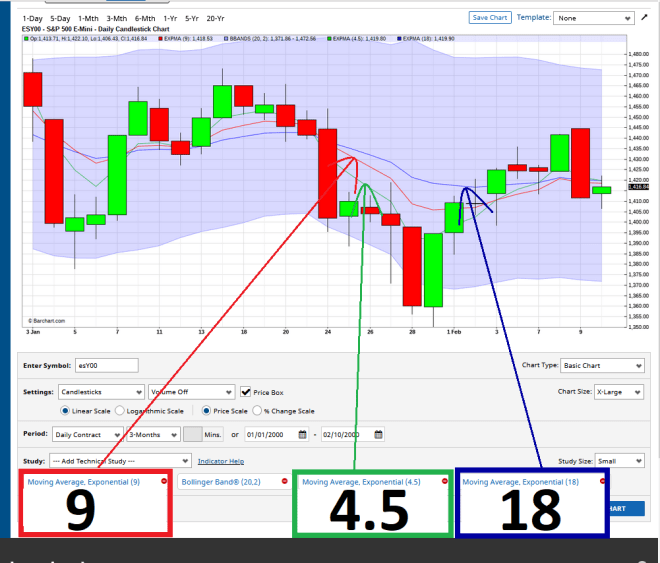
From 2008 through 2021 54.12% more

2020 and 2021 119.23% more.


Data & Sources


With new policies trade deficits have started to escalate, so have purchases of U.S. treasuries by foreign investors

Trade defiects

Foreign buying for US Treasureis

Monetization has fully engaged

GDP per capita versus inflation

Unfunded liability

Employment

Inability to pay a competitive rate

Fictitious inflation


Growth in income has outpaced inflation

Home prices

Investments

Federal Revenue per capita

Federal spending per capita

To show you how fictitious BLS.Gov

New deal

World War 2

Debt downgrades

Federal Government’s inability to borrow on the open market

Fed’s creation of money

Per taxpayer debt escalated from to , per capita debt

Rest of the world’s debt per capita

resulting in two debt down grades in 2013 the latest in 2013, currently U.S. Federal Debt shares the same credit rating as Finland and Hong Kong.

Can you justify this? The Federal Government spent $53,647 on every employed person in the U.S equivalent to 89.95% of average personal income.

In 2021 it’s running at 84.71% of personal income (this is without the 4 Trillion in additional “stimulus” or $27,480 on every employed person.


Data & Sources

Assets and income priced in gold

Top 20 stocks over the last 20 years

Have to watch monetization

Massive stock sales prior to the hike in long-term capital gains

Long-term bond holders are going to hemorrhage

Massive foreign liquidation

Higher corporate taxation, more regulation and a hike in minimum wage will will make U.S. corporations relocate offshore, Federal corporate tax revenue will decline.

High net worth individuals will move assets and income offshore further reducing Federal tax revenue

Trade deficits will escalates

The Federal Government will be unable to borrow enough money to sustain it’s budget and unable to satisfy unfunded liabilities

Trillions more money will b e created

On deck an inflationary depression

You can let these fundamentals work you or you can work them

Being on the right side of economic change.


EMA Disclosure Draft

Qualified Eligible Participant

Redo everything make uniform and professional

I’m going to teach this objective trading program by showing you how to verify it’s performance.

Go to the ATA performance page linked here

Click on the first allocation 7091671 ,

The allocation’s webpage as a spreadsheet linked to the chart on top,
Click on EMA 7091671 Spreadsheet

Download the spreadsheet

Enable editing

The spreadsheets for individual method traded are linked in cells J24-J45.

Click on the first one S&P 500 (SP) linked in cell J24, download it, and enable editing,

Column, M, date and links to supporting charts
L, shows that day’s position, long in green, short  in red
N, daily profit or loss
O, cumulative profit or loss

All EMA methods use the same set of Exponential Moving averages, they’re preset in every chart linked monthly from 2000 through 2021.

Open the first chart 1/3/2000 linked in cell M36

The exponential moving averages we’re using are 9 in red, 4.5 green, and 18 blue

Trading with the right EMAs is about as simple as it gets

The green (EMA 4.5) will show you when the market is turning

When  red (EMA9) goes above blue (EMA18) establish a long position
If red (EMA9) moves below blue (EMA 18) reverse to short


EMA 5080243

To update or track this allocation forward see this page

Schedule an online review using the 5080243 Performance & Data Spreadsheet I’ll walk you through what we’re trading and how enabling you to verify past performance and monitor trades forward.

1) Summary

2) Monthly and net performance annual, no compounding and withdrawing all profits annually.


Disclosure

3) 5080243 Performance & Data Spreadsheet

A) Allocation performance
B
) Individual method performance
C) Monthly profit or loss
D) P
erformance statistics
E) Margin requirements
F) Contract specifications
G) 2000 through 2021 monthly and annual performance.

H) Monthly and annual performance for every method traded.

Cells J24 – J45 link spreadsheets for each method traded

4) These spreadsheets provide

A) Quotes & charts updated every 15 minutes to monitor this method forward
B) Method performance summary
C) Method versus market performance
D) Monthly and annual performance
E) All historical data

Column K, shows date and links to supporting EMA charts
L, daily positions, long = green, short = red, 2000 through 2021.
M daily profit or loss
N cumulative profit or loss
Click here for full disclosure of trading methodology

5) There are 4,194,303 possible combinations of the 22 EMA trading methodologies if like to review the top allocations or create your own see this page.

6) Any allocation can be traded automatically for your account.

7) Using any reasonable maintenance balance

About Automated Trading Accounts (ATAs)
The ATA Fee Structure
Defining Overall Risk for Your ATA
Brokerage Firms
How Funds Are Protected
Open An Account
Futures General Information
Options General Information
Market Analysis Pages
Educational Resources

If you have any questions or want me to walk your through what were doing and how contact me.

Peter Knight Advisor
Direct VI Phone 24/7 +340 244 4310
Skype: Peter-Knight-Advisor
Message me

Schedule an online review
Peter_Knight@peterknightadvisor.com


Privacy Notice

Disclosure

EMA 2644958

To update or track this allocation forward see this page

Schedule an online review using the 2644958 Performance & Data Spreadsheet I’ll walk you through what we’re trading and how enabling you to verify past performance and monitor trades forward.

1) Summary

2) Monthly & annual, no compounding, withdrawing all profits annually.


Disclosure

3) 2644958 Performance & Data Spreadsheet

A) Allocation performance
B
) Individual method performance
C) Monthly profit or loss
D) P
erformance statistics
E) Margin requirements
F) Contract specifications
G) 2000 through 2021 monthly and annual performance.

H) Monthly and annual performance for every method traded.

Cells J24 – J45 link spreadsheets for each method traded

4) These spreadsheets provide

A) Quotes & charts updated every 15 minutes to monitor this method forward
B) Method performance summary
C) Method versus market performance
D) Monthly and annual performance
E) All historical data

Column K, shows date and links to supporting EMA charts
L, daily positions, long = green, short = red, 2000 through 2021.
M daily profit or loss
N cumulative profit or loss
Click here for full disclosure of trading methodology

5) There are 4,194,303 possible combinations of the 22 EMA trading methodologies if like to review the top allocations or create your own see this page.

6) Any allocation can be traded automatically for your account.

7) Using any reasonable maintenance balance

About Automated Trading Accounts (ATAs)
The ATA Fee Structure
Defining Overall Risk for Your ATA
Brokerage Firms
How Funds Are Protected
Open An Account
Futures General Information
Options General Information
Market Analysis Pages
Educational Resources

If you have any questions or want me to walk your through what were doing and how contact me.

Peter Knight Advisor
Direct VI Phone 24/7 +340 244 4310
Skype: Peter-Knight-Advisor
Message me

Schedule an online review
Peter_Knight@peterknightadvisor.com


Privacy Notice

Disclosure

EMA 1185669

To update or track this allocation forward see this page

Schedule an online review using the 1185669 Performance & Data Spreadsheet  I’ll walk you through what we’re trading and how enabling you to verify past performance and monitor trades forward.

1) Summary

2) Monthly and annual net profit, no compounding and withdrawing all profits annually.


Disclosure

3) 1185669 Performance & Data Spreadsheet

A) Allocation performance
B
) Individual method performance
C) Monthly profit or loss
D) P
erformance statistics
E) Margin requirements
F) Contract specifications
G) 2000 through 2021 monthly and annual performance.

H) Monthly and annual performance for every method traded.

Cells J24 – J45 link spreadsheets for each method traded

4) These spreadsheets provide

A) Quotes & charts updated every 15 minutes to monitor this method forward
B) Method performance summary
C) Method versus market performance
D) Monthly and annual performance
E) All historical data

Column K, shows date and links to supporting EMA charts
L, daily positions, long = green, short = red, 2000 through 2021.
M daily profit or loss
N cumulative profit or loss
Click here for full disclosure of trading methodology

5) There are 4,194,303 possible combinations of the 22 EMA trading methodologies if like to review the top allocations or create your own see this page.

6) Any allocation can be traded automatically for your account.

7) Using any reasonable maintenance balance

About Automated Trading Accounts (ATAs)
The ATA Fee Structure
Defining Overall Risk for Your ATA
Brokerage Firms
How Funds Are Protected
Open An Account
Futures General Information
Options General Information
Market Analysis Pages
Educational Resources

If you have any questions or want me to walk your through what were doing and how contact me.

Peter Knight Advisor
Direct VI Phone 24/7 +340 244 4310
Skype: Peter-Knight-Advisor
Message me

Schedule an online review
Peter_Knight@peterknightadvisor.com


Privacy Notice

Disclosure

EMA 7091688

To update or track this allocation forward see this page

Schedule an online review using the 7091688 Performance & Data Spreadsheet I’ll walk you through what we’re trading and how enabling you to verify past performance and monitor trades forward.

1) Summary

2) Monthly and annual net performance, no compounding and withdrawing all profits annually.


Disclosure

3) 7091688 Performance & Data Spreadsheet

A) Allocation performance
B
) Individual method performance
C) Monthly profit or loss
D) P
erformance statistics
E) Margin requirements
F) Contract specifications
G) 2000 through 2021 monthly and annual performance.

H) Monthly and annual performance for every method traded.

Cells J24 – J45 link spreadsheets for each method traded

4) These spreadsheets provide

A) Quotes & charts updated every 15 minutes to monitor this method forward
B) Method performance summary
C) Method versus market performance
D) Monthly and annual performance
E) All historical data

Column K, shows date and links to supporting EMA charts
L, daily positions, long = green, short = red, 2000 through 2021.
M daily profit or loss
N cumulative profit or loss
Click here for full disclosure of trading methodology

5) There are 4,194,303 possible combinations of the 22 EMA trading methodologies if like to review the top allocations or create your own see this page.

6) Any allocation can be traded automatically for your account.

7) Using any reasonable maintenance balance

About Automated Trading Accounts (ATAs)
The ATA Fee Structure
Defining Overall Risk for Your ATA
Brokerage Firms
How Funds Are Protected
Open An Account
Futures General Information
Options General Information
Market Analysis Pages
Educational Resources

If you have any questions or want me to walk your through what were doing and how contact me.

Peter Knight Advisor
Direct VI Phone 24/7 +340 244 4310
Skype: Peter-Knight-Advisor
Message me

Schedule an online review
Peter_Knight@peterknightadvisor.com


Privacy Notice

Disclosure